· 4 min read
Building a Deck That Survives Central Coast Fog and Salt Air
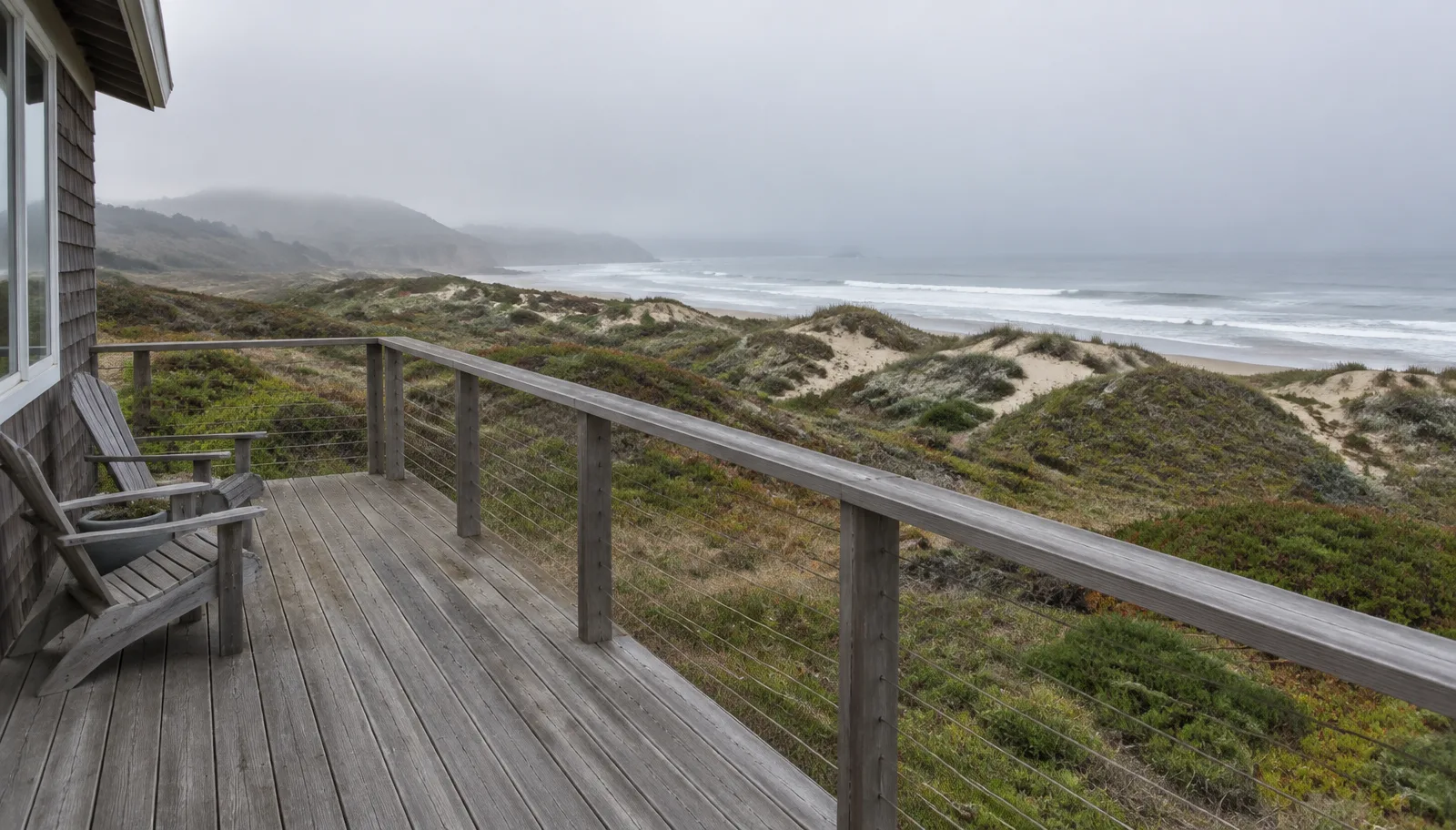
Anyone who has spent a summer morning in Guadalupe knows the marine layer. Fog rolls in off the Pacific, settles over the fields and dunes, and often lingers until midday before the sun breaks through. It is part of what keeps the Santa Maria Valley mild, but it is also hard on anything built outdoors. A deck here has to handle damp mornings, salty air, strong afternoon sun, and steady wind, sometimes all in the same day.
Here is how coastal conditions affect decks, how common materials hold up, and what to think about before you build or refresh one.
What fog, salt, and sun do to a deck
Moisture is the biggest factor. When fog keeps boards damp for hours, wood has fewer chances to dry out. Over time that invites mildew, algae, and eventually rot, especially on shaded sides of a house or in corners with little airflow.
Salt air adds a second problem. Closer to the ocean, salt carried on the breeze settles on surfaces and speeds up corrosion of ordinary steel screws, nails, and connectors. Rusted hardware can stain boards and, more importantly, weaken the connections that hold a deck together.
Then there is the sun. On clear afternoons, ultraviolet light breaks down wood fibers and finishes, turning unprotected wood gray and causing surface checking. Composite boards are more resistant, but they can still fade and get warm underfoot.
Wood or composite?
There is no single right answer. Each material trades off appearance, upkeep, and budget, and the best choice depends on your site and how much maintenance you want to do.
- Redwood: a classic West Coast choice with a warm color. Its heartwood has natural resistance to decay and insects, but it is relatively soft and needs a finish to keep its color rather than weathering to gray.
- Cedar: similar to redwood, with natural resistance in the heartwood and a light, pleasant look. It also scratches easily and benefits from regular sealing.
- Pressure-treated lumber: economical, widely available, and the usual choice for framing. It can check, warp, or split as it dries and needs regular sealing. Posts near soil should be rated for ground contact.
- Capped composite: boards with a protective polymer shell that resists stains, fading, and moisture better than older uncapped composites. It needs less upkeep than wood, but it can still collect surface mildew in damp, shady spots, and it can get hot in direct sun.
Even a composite deck usually sits on a wood frame, so the parts you cannot see matter as much as the boards you walk on.
Fasteners and hardware near the coast
Near the ocean, hardware deserves real attention. Stainless steel fasteners and connectors are widely recommended for coastal exposure because they resist salt corrosion, and hot-dip galvanized hardware is a common option farther from the water. Plain or lightly coated steel tends to rust quickly in salty, damp air.
Pressure-treated lumber adds another wrinkle, because modern preservatives can be corrosive to some metals. Use fasteners and connectors the manufacturer rates for use with treated wood, and avoid mixing different metals in the same connection, which can speed up corrosion.
Drainage, ventilation, and ground clearance
A deck lasts longer when water has somewhere to go and air can move around the structure. A few principles help:
- Leave appropriate gaps between boards so water drains and debris does not pile up.
- Slope the surface slightly away from the house so water does not collect against the wall.
- Flash the connection where the deck attaches to the house carefully. A poorly flashed ledger is a common source of hidden rot.
- Give the underside room to breathe. Decks built very close to the ground stay damp longer, so ground clearance and open sides help airflow.
- Keep plants, soil, and leaf litter from piling up against posts and framing.
Routine maintenance
Coastal decks reward a simple routine. Clean the surface a few times a year to remove dirt, salt residue, and mildew, using a cleaner suited to your decking. Go easy with pressure washers, which can gouge wood and damage some composites.
Reseal or refinish wood on the schedule recommended for your product, and sooner if water stops beading on the surface. Once a year, walk the deck and look underneath for loose or rusted fasteners, soft spots in boards or framing, wobbly railings, and trouble where the deck meets the house. Small problems are far easier to fix early.
Planning a new deck
Permit requirements vary by city and county, and Guadalupe, Santa Maria, and unincorporated Santa Barbara County each have their own rules, so check with the local building department before you start. Rules can also depend on the deck's height, size, and attachment to the house.
It is also worth getting a site assessment before choosing materials. Sun exposure, wind direction, distance from the ocean, drainage, and soil conditions all affect what will last. If you would rather not go it alone, a local deck builder who works in coastal conditions can walk the site with you and talk through options. You can also browse our Local Guide for other practical services around the valley.
Looking for inspiration? Take a slow drive with our guide to Guadalupe to Pismo on Highway 1 and notice how coastal homes make their outdoor spaces work.
Related posts
October 5, 2026 · 3 min read
A first-timer's day in Guadalupe
A relaxed, unhurried plan for your first day in Guadalupe: a downtown stroll, the dunes, the coast, and the farm fields that define the town.

October 5, 2026 · 3 min read
Visiting the Guadalupe-Nipomo Dunes
Guide to the Guadalupe-Nipomo Dunes: where to go, what to bring, and how to protect this fragile coastal landscape.

October 5, 2026 · 3 min read
Guadalupe to Pismo on Highway 1
A relaxed weekend drive from Guadalupe north to Pismo Beach along Highway 1, with farm fields, dunes, small towns, and ocean views along the way.